
A Thoughtful Reflection On Endurance: The Extraordinary Feminine Wisdom Of The Rare Coco De Mer Seed
Written by Kahshanna Evans
On a sleepless night, while lost in thought about what an unpredictable year it’s been, I mindlessly scrolled through social channels when the frequency of a young jazz musician scatting over a playful bossa nova track grabbed my attention. The frequency of his melodic riff translated to an end-of-year anthem I didn’t know I needed, transporting me far beyond New York City limits without ever speaking a legible word. Life is calling you, his understated solo improvisation seemed to suggest, stay tuned with wonder, peace, and purpose.
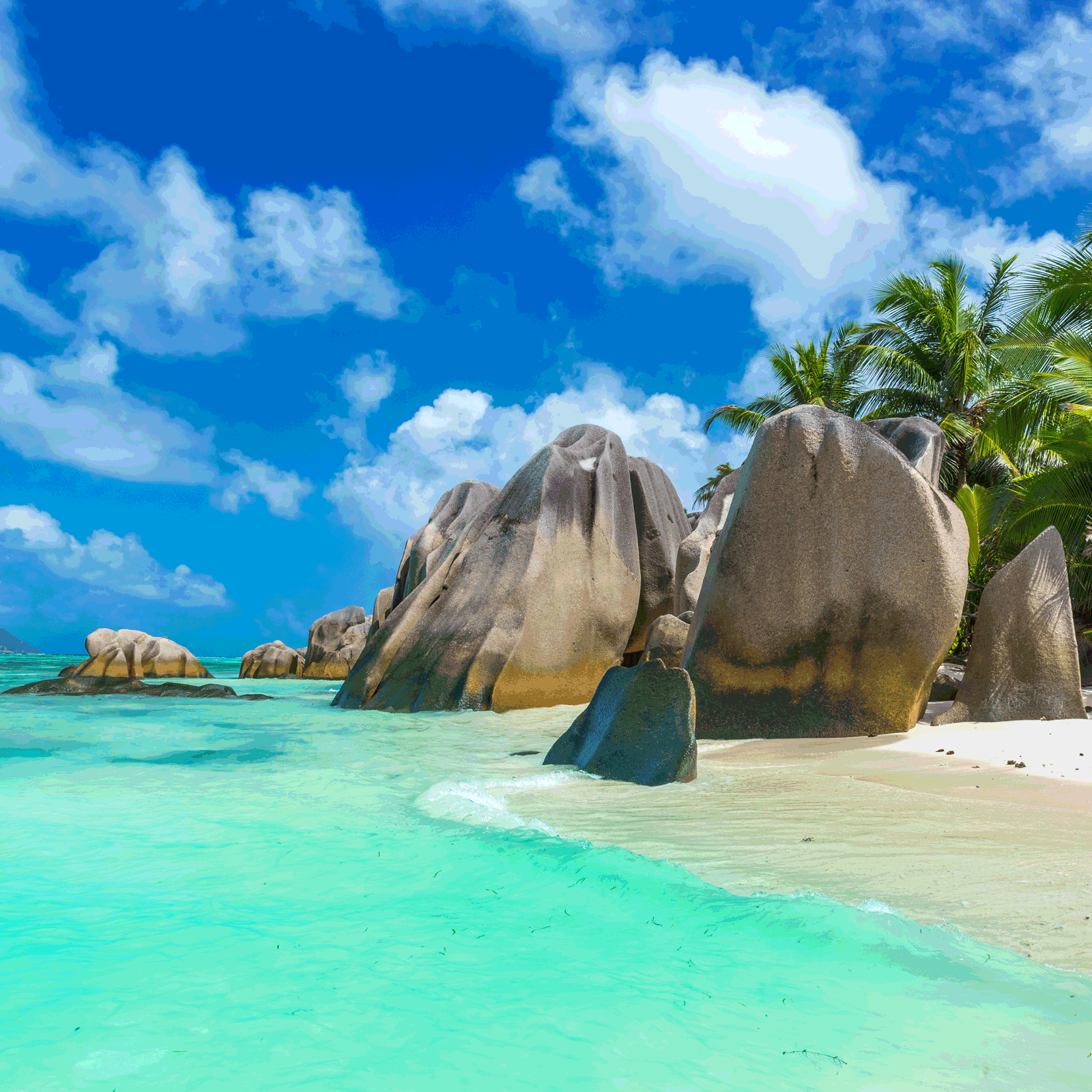
In less than one minute, the frequency of the short track transported me to Seychelles, a paradisiacal island—located off the coast of Kenya—that’s been the center of my year. The archipelago of an estimated 115 islands in the Western Indian Ocean, is the exact opposite of the relentless cacophony of sirens, midnight car alarms, and defiant rush hour horns in crowded metropolis cities. A proud member of the African Union, Seychelles has become my new “North Star” of paradise because it has something that no one else in the world has: the towering, protected coco de mer palm which is mother to the world’s largest and heaviest seed, grown exclusively in Praslin and Curieuse.
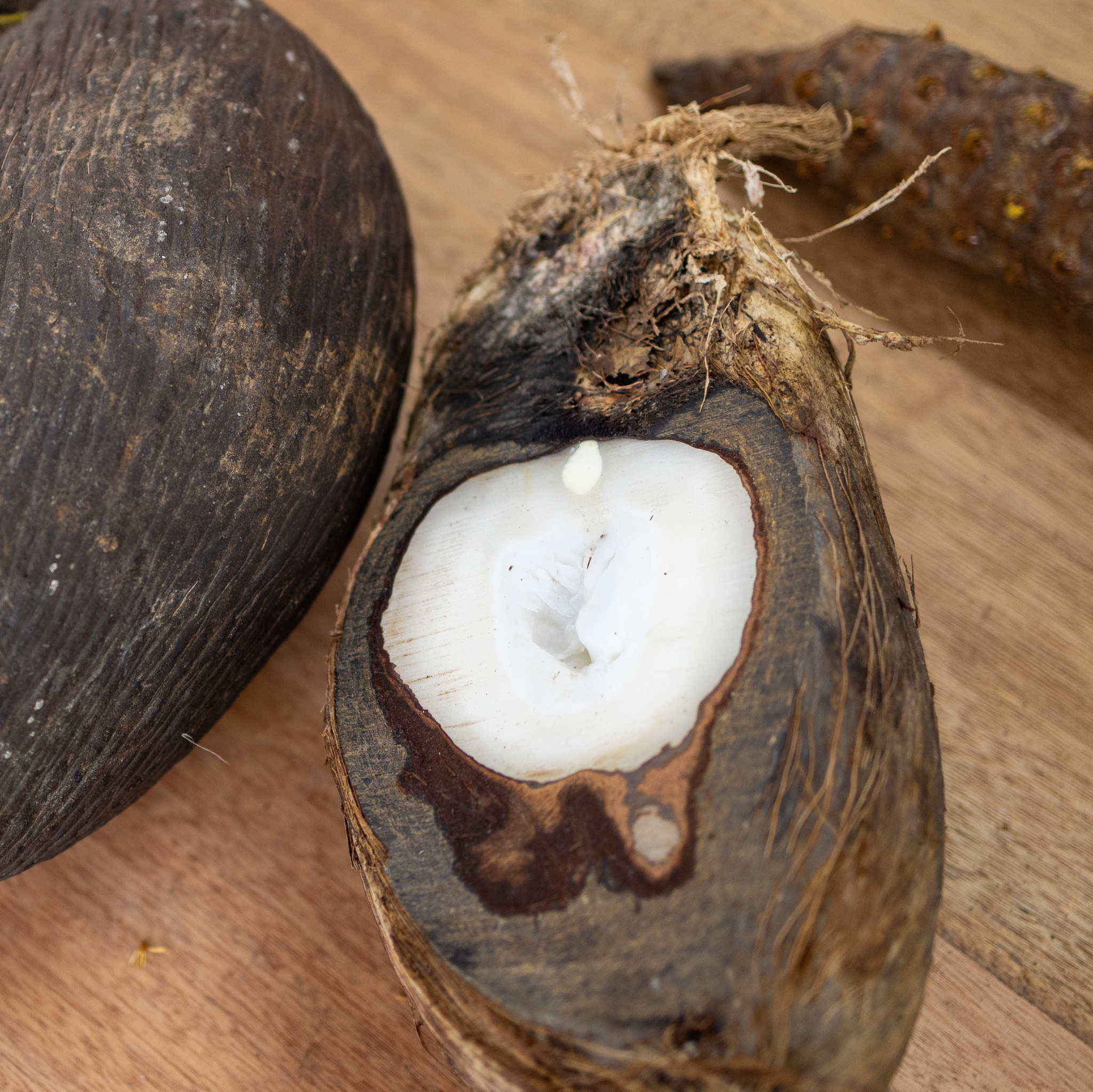
The exquisite coco de mer seed, renowned for its stunning resemblance of a woman’s curves, can measure up to 20 inches and weigh up to 55 pounds and is truly impressive. It’s something altogether mesmerizing to actually hold in your hands and spend time with its wisdom. Nature, I’ve learned, is a great teacher, if we let it be—my time with the coco de mer seed, and becoming a perfume docent for the exquisite collection developed from the seed’s fragrant husk, was no different. Just like the jazzy midnight track that summoned dreamy joy, reflecting on what I’ve learned from the bulbous coco de mer this year has given me a different blueprint altogether.
From Tall Poppy to Giant Palm, the Coco de Mer is a Lesson in Rising with Grace
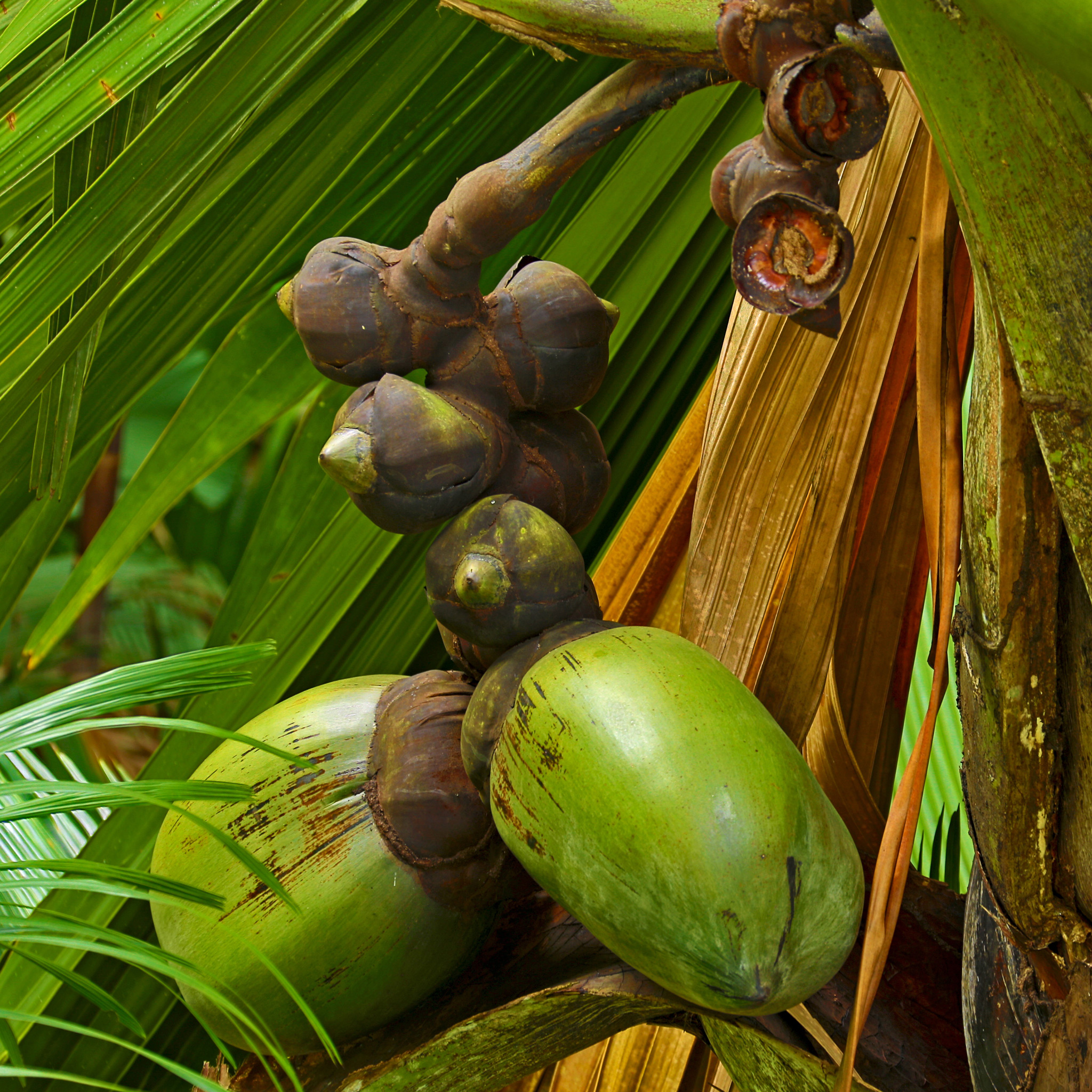
The majestic coco de mer palms, the largest of which were said to be a little more than half of the length of a football field, are believed to date back to prehistoric times. At an average impressive height of 82-111 feet, they are a standing representation of nature’s unapologetic sovereignty. To pay homage to this living giant standing at its base, in the hopes to see its top, requires a heart-opening stance: shoulders back, heart opened, back arched, and face parallel to the sky. Its stature reminds the weary tall poppy to endure by looking up to shift perspective when the world prefers sameness.
Like the Coco de Mer Palm,
There’s a Quiet Rhythm to Maturation
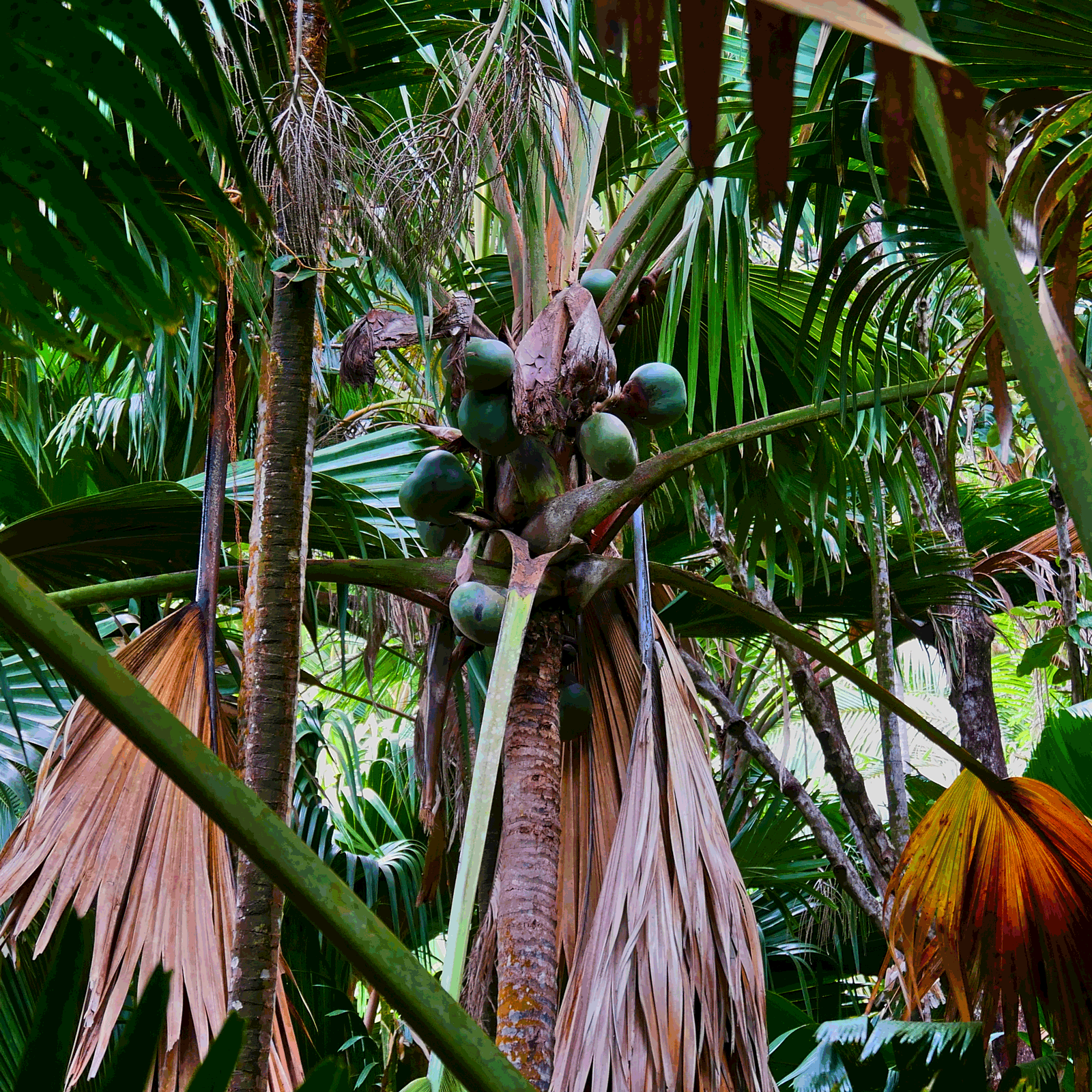
Added to the 25-50 years it takes for a coco de mer palm to grow is an additional 6-10 years for it to produce its remarkable seed surrounded by a notoriously aromatic husk. Given its endangered status, it’s illegal to cut the seeds from the palm (cutting damages the palm and its ability to create future seeds). In order to access the rare seed, teams that gather it have to wait until they naturally fall from the palms. Thinking back, it took impossible patience as a young girl to become womanly like everyday grown-ups I secretly examined as I impatiently awaited my turn.
In stark contrast to my then lanky appearance, awaiting Barbie-like curves—which I thought were promised to every girl—took forever. I was terrified every day that I would somehow be unseen, insignificant, and eternally stuck in girl form. The coco de mer palm reminds me that time is a teacher, and maturity can’t be rushed. By getting lost in play, sports, schoolgirl crushes, and trying new things back then, I was learning through seasons of growth that I couldn’t have predicted. Those early days were the beginning of my own personal blueprint.
Next Level Conservancy of Natural Ecosystems is Our Key to Interconnection
The coco de mer palm is endangered and can’t thrive just anywhere—its tropical locale, nearness to the sea, and atypical composition of granular soil make it uniquely endemic to the Seychelles. The survival of these sacred forests depends on economies of care and protection rather than illegal extraction. The Seychelles ability to nurture coco de mer palms is attributed to its commitment to conservancy and standing as a leader of the Blue Economy concept, which prioritizes sustainability, economic efficiency, social equity, resilience, innovation, transparency, accountability, and partnerships.
It’s one thing to bask in the latest mass produced perfume while casually talking about belonging, mattering, and ethics in individualistic settings—now ages old topics that seem to endlessly loop about ways mankind has pillaged the earth. It’s, yet another, however, to actively co-create thriving human ecosystems of prosperity that sustain collectivist values and prioritize a balance between innovation, conservancy, whole-person wellbeing, and the natural world. Luxury redefined is an Earth we can all cohabitate.
Luxury With Ties to the Land of My Origin Changed My Year
Learning the exciting news that I’d be working on the U.S. launch of Coco de Mer Perfume Collection, created by Seychellois Creole collection creator and Conservationist Sharon Bonne, brought back memories of my first trip to Africa years ago. That time I spent in the Mother Land sparked the beginning of a more profound personal excavation and thoughtful reflection on culture, identity, and heritage. This time, a seed exclusively grown in a remote African island nation found me all the way in the largest city in the U.S.: New York City.
Full circle life moments this year have included holding the hulking seed and hearing Bonne’s liberating theory, first hand, that every woman has her very own “Coco de Mer twin” in nature. Much like Creole people across areas of the U.S. and Caribbean, Bonne mused I looked like her grandmother during an endearing chat as we talked shop about her expansive knowledge about coco de mer and what makes perfumes “The One” to those visiting her family-owned atelier in Seychelles.
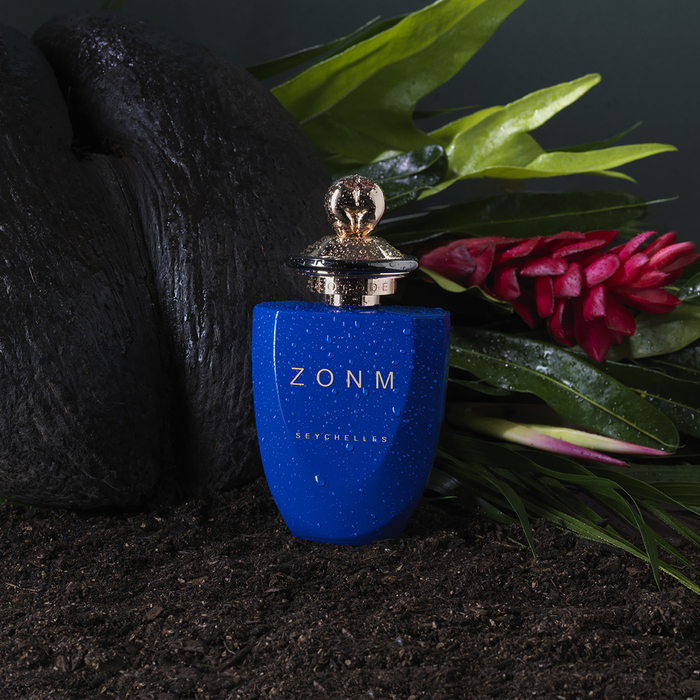
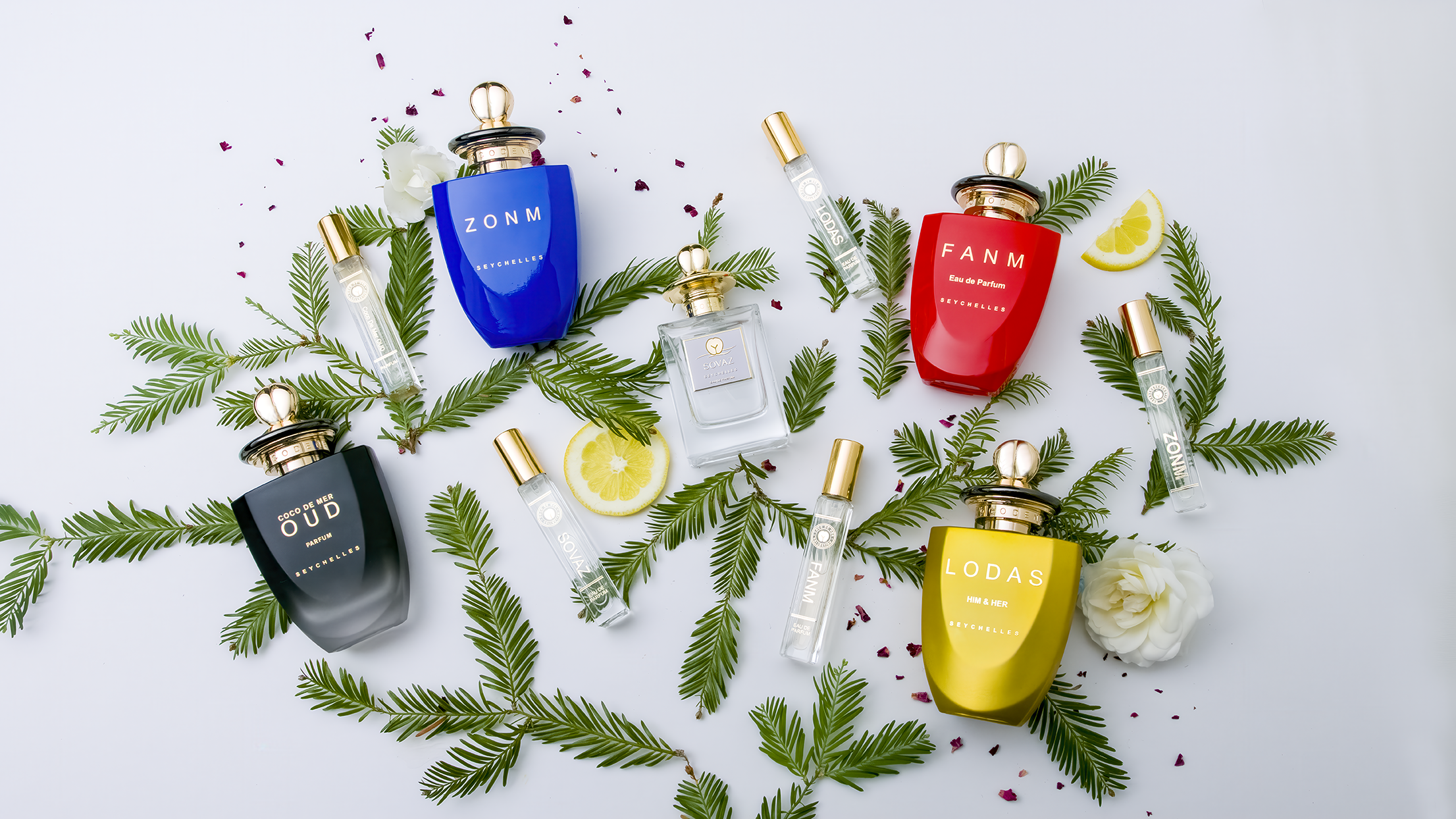
For me, love at first scent was a deep, sweet inhale of the only OUD in the world with real coco de mer, allowing me to experience the actual rare ingredient—not just an imitation accord. Next came the custom designed black geometric shaped bottle with a heavy gold top with a handle shaped like a mini coco de mer.
What I love most? My bottle of OUD didn’t become a living archive of sacred wisdom for me until it mixed with my own essence. That’s how I knew it was “The One.” That’s how I fell.
Related Articles
Related
Beauty as Cultural Language: Power, Identity & Reclamation
Beauty has never been neutral. Long before it was reduced to trends, routines, or billion-dollar product lines, beauty functioned as language, a way communities signaled belonging, resistance, status, spirituality, and survival. For Black and diasporic cultures in...
Beauty as Cultural Language: Power, Identity & Reclamation
Beauty has never been neutral. Long before it was reduced to trends, routines, or billion-dollar product lines, beauty functioned as language- a way communities signaled belonging, resistance, status, spirituality, and survival. For Black and diasporic cultures in...
Taking Back the Beauty Supply: How Black Entrepreneurs Are Transforming an Industry
When Nia Jackson walked into yet another beauty supply store and got followed around like a shoplifter, she'd had enough. "I was spending thousands of dollars a year on hair products, and still getting treated like I didn't belong," she recalls. "That's when I...
Links
- About Us
- Events
- Advertise
- Write For Us
- Contact